








Recent Public Posts - [guest]
| Re: Lighthouses in the West - expanded topic heading In "The Lighter Side" [375255/32040/30] Posted by Chris from Nailsea at 20:15, 18th May 2026 |      |
I wish I'd never started this topic ...

| The Rise and Fall of Britain's Strangest Railway - Seashore Electric Railway In "Railway History and related topics" [375254/32046/55] Posted by Chris from Nailsea at 20:10, 18th May 2026 | |
From a twelve and a half minute item from YouTube:
The Rise and Fall of Britain's Strangest Railway
Of all the railways the Victorians built, only one was ever laid on the sea bed. The Seashore Electric Railway (a.k.a. 'Daddy Long-legs') was a train-boat-pier hybrid, allowing passengers to enjoy England's coast from above the waves. But the route was plagued by a harsh coastal environment and financial struggles, lasting just a few years before being left abandoned—one man's wild invention that eventually clashed with reality. Let's take a look at the Seashore Electric Railway's origins, construction, operational challenges, and what eventually happened to Britain's strangest railway.
Of all the railways the Victorians built, only one was ever laid on the sea bed. The Seashore Electric Railway (a.k.a. 'Daddy Long-legs') was a train-boat-pier hybrid, allowing passengers to enjoy England's coast from above the waves. But the route was plagued by a harsh coastal environment and financial struggles, lasting just a few years before being left abandoned—one man's wild invention that eventually clashed with reality. Let's take a look at the Seashore Electric Railway's origins, construction, operational challenges, and what eventually happened to Britain's strangest railway.
| Re: Lighthouses in the West - expanded topic heading In "The Lighter Side" [375253/32040/30] Posted by JayMac at 20:00, 18th May 2026 | |
Why did you have a foghorn in your holiday caravan?
Mark
Mark
I can hear a Les Dawson mother-in-law joke in my head.
| Re: Lighthouses in the West - expanded topic heading In "The Lighter Side" [375252/32040/30] Posted by Mark A at 19:55, 18th May 2026 Already liked by JayMac | |
Why did you have a foghorn in your holiday caravan?
Mark
| Re: London Tube strikes by RMT - ongoing developments in early 2026 In "Transport for London" [375251/31740/46] Posted by Chris from Nailsea at 18:54, 18th May 2026 | |
I have now, sigh, merged and renamed those topics into this one.
My thanks to the RMT.
| Re: London Tube strikes by RMT - ongoing developments in early 2026 In "Transport for London" [375250/31740/46] Posted by TaplowGreen at 18:04, 18th May 2026 | |
There's also the previous thread on this subject, when last month's strikes were announced - so were those for May (now Cancelled) & June (now moved). That subject line may need an edit too.
https://www.firstgreatwestern.info/coffeeshop/index.php?topic=31740.0
https://www.firstgreatwestern.info/coffeeshop/index.php?topic=31740.0
Think you'll find they've been rescheduled for 2-4 June rather than 4-6.
| Re: First day report and ramblings - Bristol <-> Oxford, 6 days a week, 18.5.2026 In "Oxford, Didcot and Reading from the West" [375249/32045/22] Posted by IndustryInsider at 18:01, 18th May 2026 | |
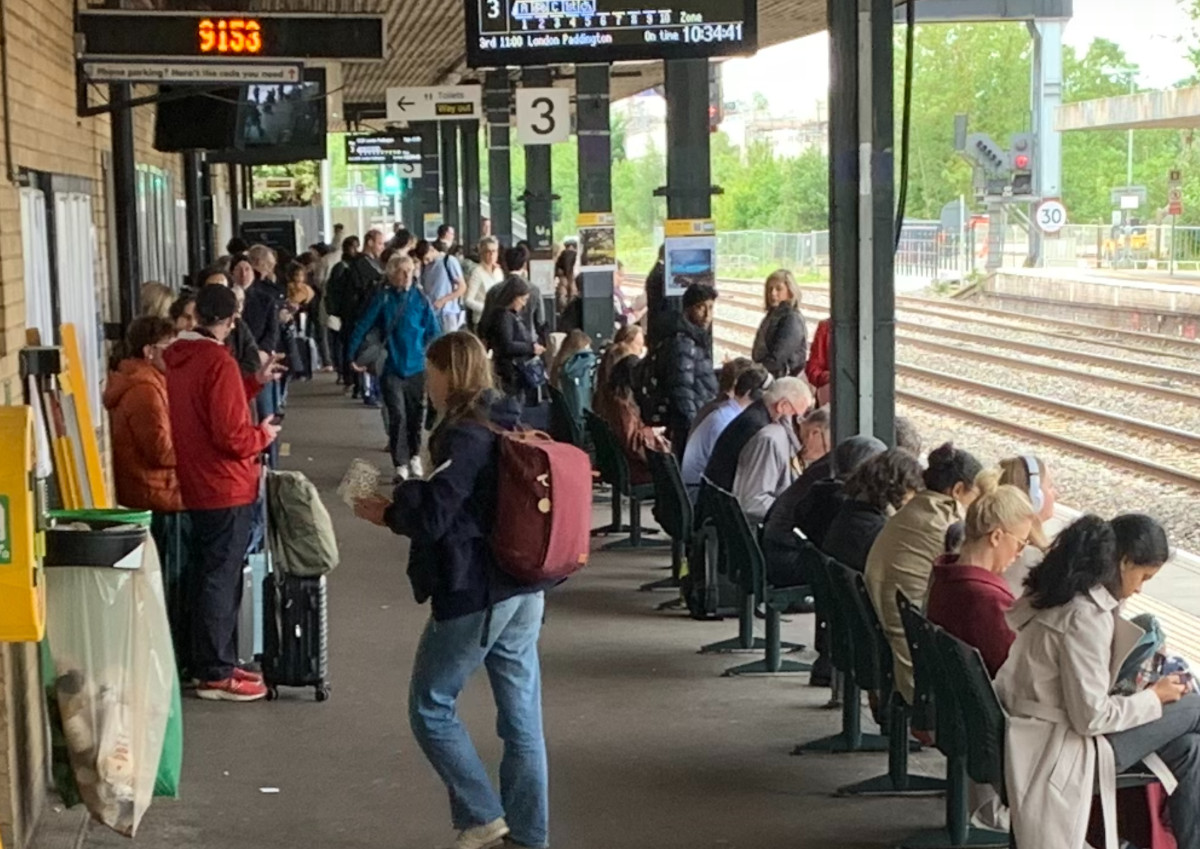
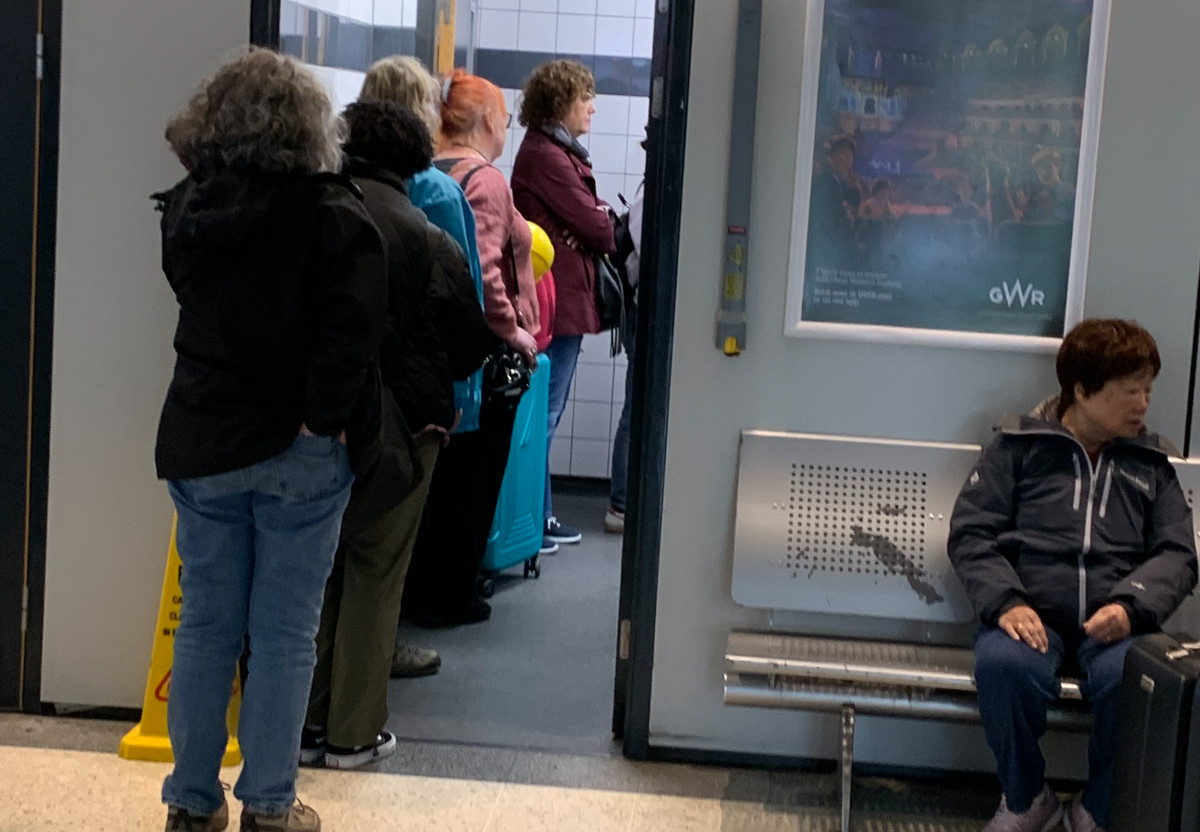
Thank you, Industry Insider for that insight; Oxford station seemed to be creaking at the seams. A single footbridge with a "silly little" lift and no refreshment on the far side. Queues for the ladies on both platform 4 and in the main station building. And this was *not* supposed to be the rush hour, nor would I expect a May Monday to be the busiest
Yes, it desperately needs that fifth platform and the new exit from Platforms 4/5. Even then the 'silly little' lift and single footbridge will be under too much pressure IMHO.
The refreshment room closed what should have been a few months before it was demolished for the Platform 5 build, and a new refreshement room, but we all know what happened there! It lay empty for a couple of years before finally being turned into a quite large waiting room a couple of months ago as a stop gap until the Platform 5 works resume.
| Re: WH Smith: their presence in railway stations and other locations - merged topics In "The Wider Picture in the United Kingdom" [375248/22143/51] Posted by grahame at 17:59, 18th May 2026 | |
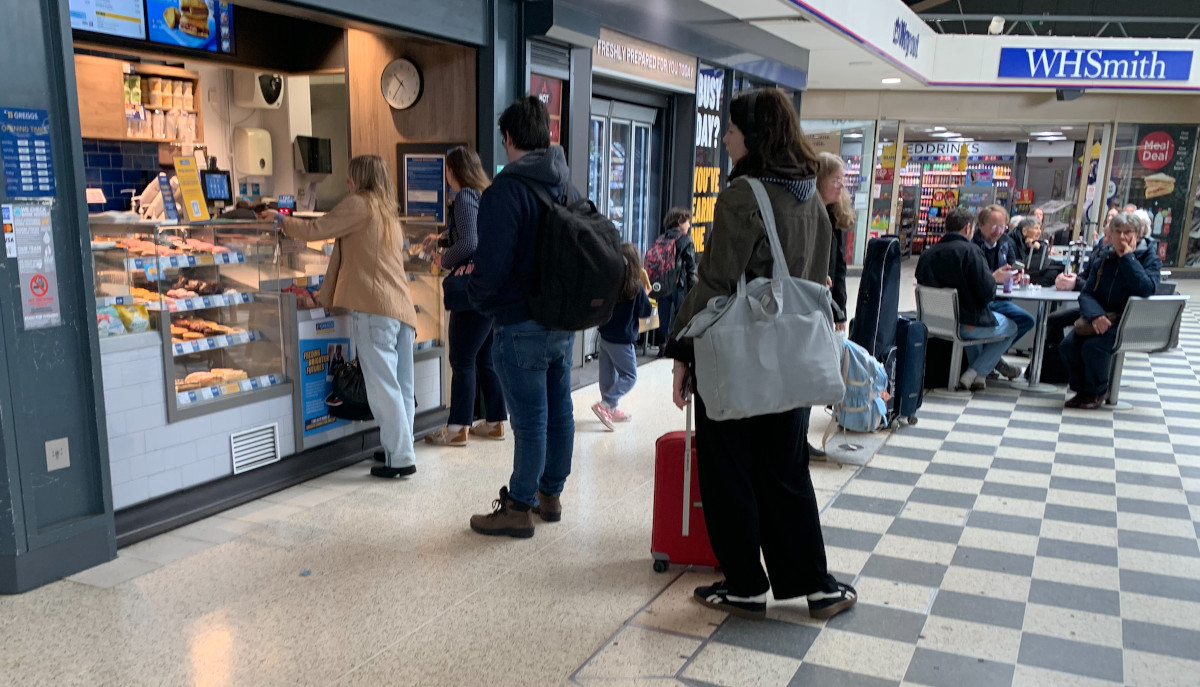
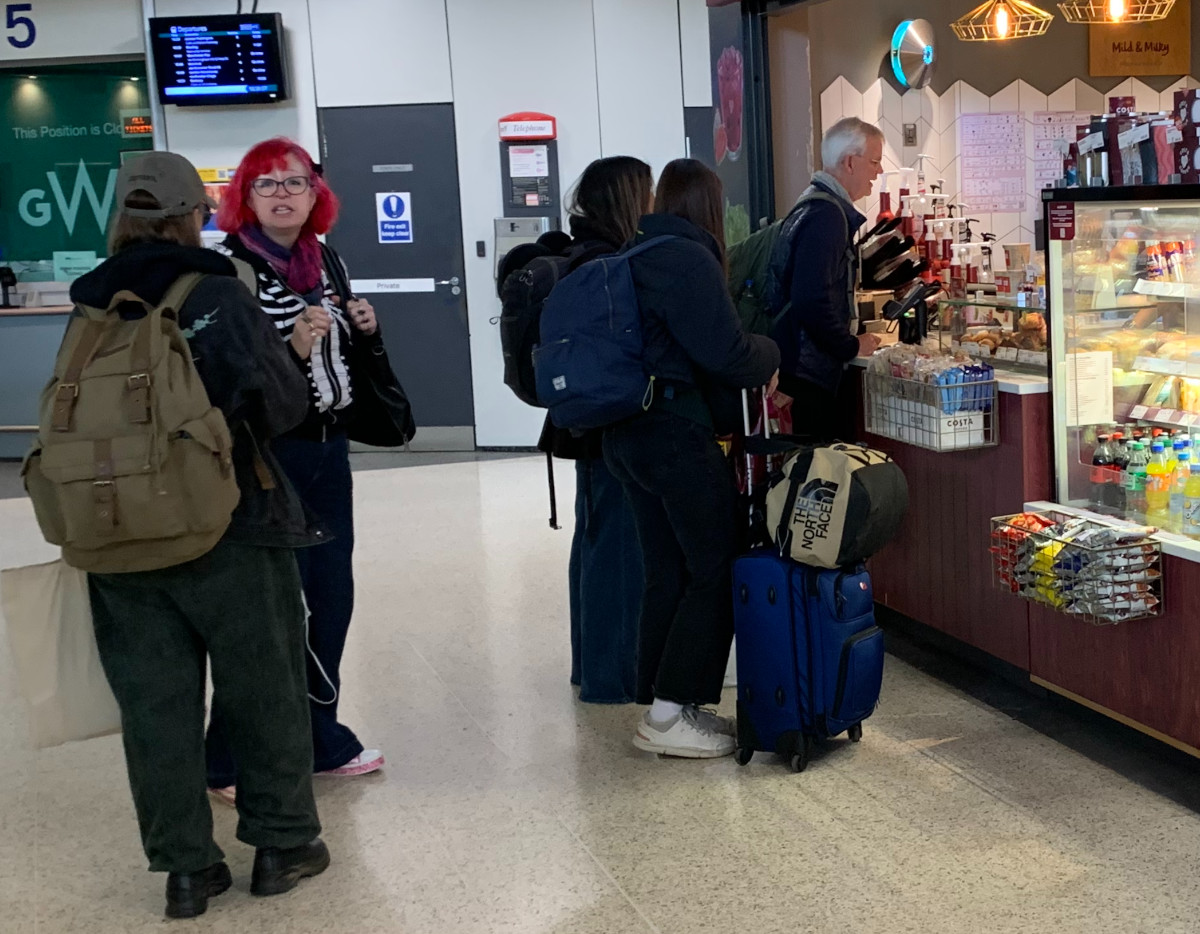
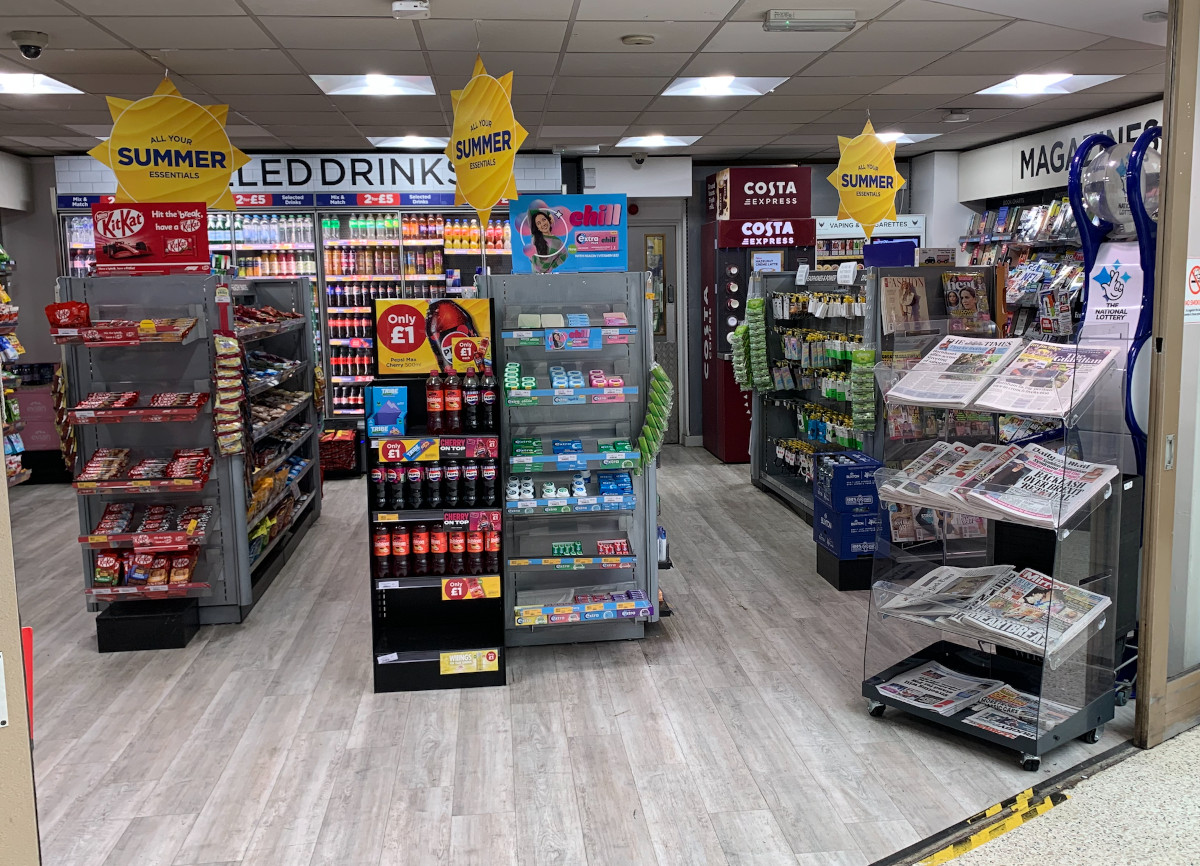
Wiliam Henry Smith would be turning in his grave if he saw how his shopfront at Oxford Station was doing in comparison to the other outlets and facilities there.
| Re: First day report and ramblings - Bristol <-> Oxford, 6 days a week, 18.5.2026 In "Oxford, Didcot and Reading from the West" [375247/32045/22] Posted by grahame at 17:19, 18th May 2026 | |
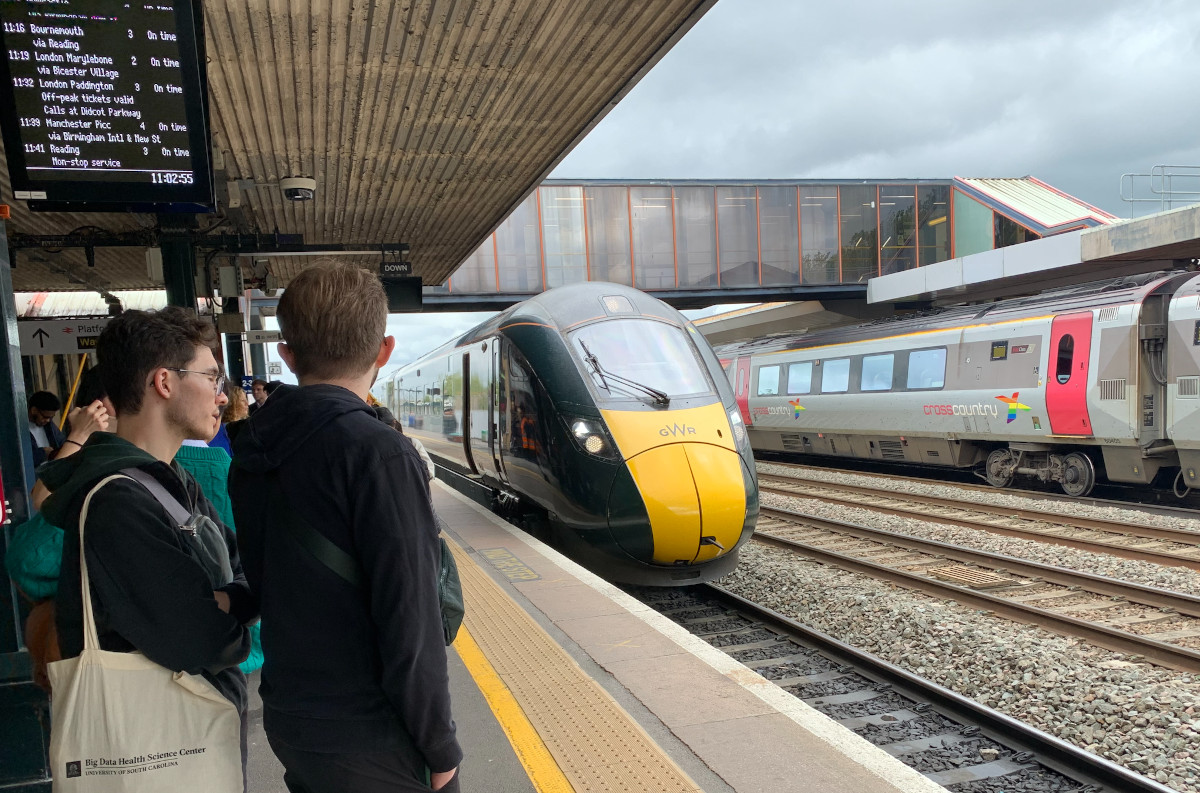
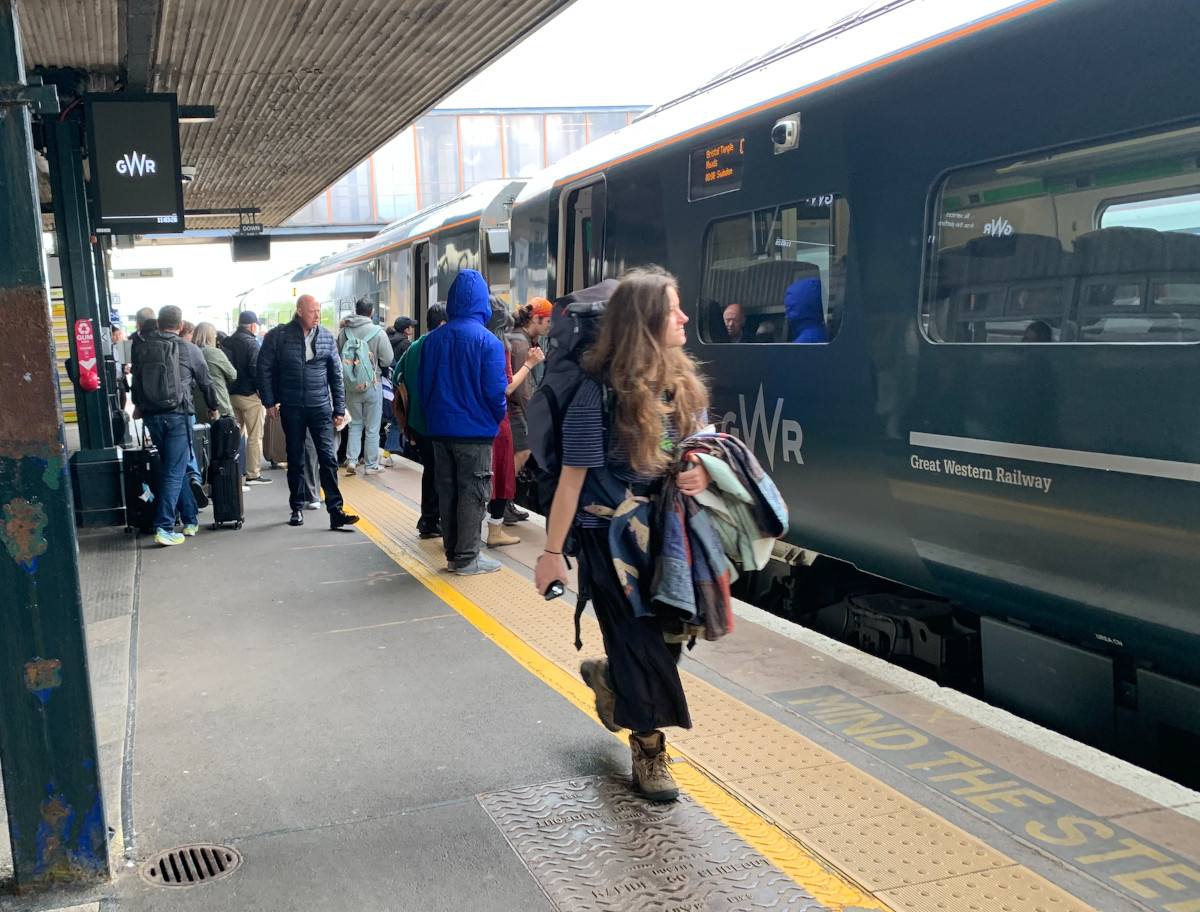
Thank you, Industry Insider for that insight; Oxford station seemed to be creaking at the seams. A single footbridge with a "silly little" lift and no refreshment on the far side. Queues for the ladies on both platform 4 and in the main station building. And this was *not* supposed to be the rush hour, nor would I expect a May Monday to be the busiest
| Re: Mid Cornwall Metro - Newquay, St Austell, Truro & Falmouth In "Shorter journeys in Plymouth and Cornwall" [375246/27102/25] Posted by Geoff DC at 17:14, 18th May 2026 | |
If the connections are sorted and a shuttle bus from St Columb Road to the airport is added, it would start to attract wider ridership in Cornwall
| Re: London Tube strikes by RMT - ongoing developments in early 2026 In "Transport for London" [375245/31740/46] Posted by ChrisB at 17:09, 18th May 2026 | |
There's also the previous thread on this subject, when last month's strikes were announced - so were those for May (now Cancelled) & June (now moved). That subject line may need an edit too.
https://www.firstgreatwestern.info/coffeeshop/index.php?topic=31740.0
| Re: London Tube strikes by RMT - ongoing developments in early 2026 In "Transport for London" [375244/31740/46] Posted by Chris from Nailsea at 17:05, 18th May 2026 | |
In view of recent developments, I have yet again amended the title of this topic.
| Re: Lighthouses in the West - expanded topic heading In "The Lighter Side" [375243/32040/30] Posted by Chris from Nailsea at 16:30, 18th May 2026 | |
I've now expanded this topic's heading, as it has attracted some wider interest.
My personal memories are of Trevose Head in Cornwall, where we heard that foghorn overnight in our holiday caravan. It never bothered me - it was just a safety feature in the distance, 'for those in peril on the sea'.
| Re: London Tube strikes by RMT - ongoing developments in early 2026 In "Transport for London" [375242/31740/46] Posted by TaplowGreen at 16:21, 18th May 2026 | |
From the BBC:
It is interesting how the 'official line' of the train drivers' union ASLEF differs from the stance of the RMT: open criticism, actually.
Tube strike set to go ahead after failed talks
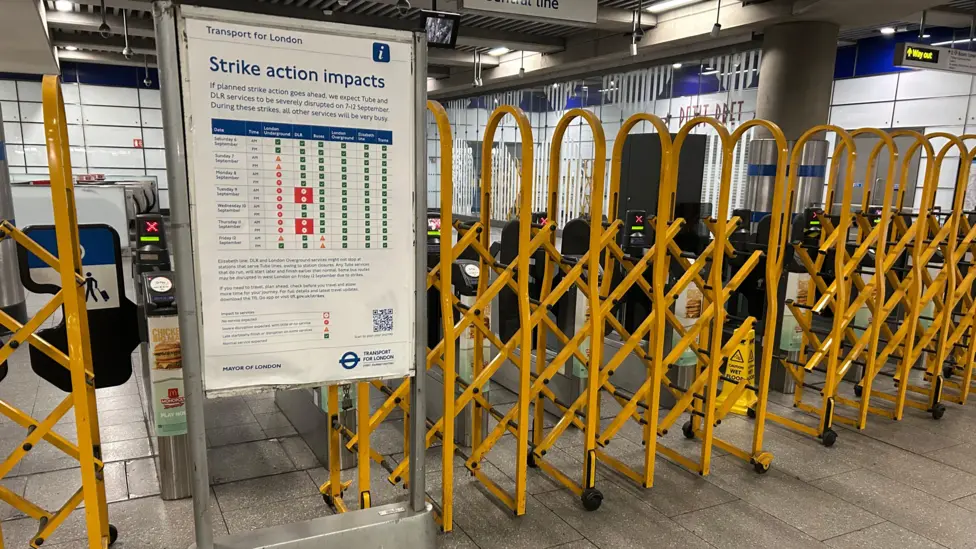
Image © BBC/Harry Low
Another wave of industrial action is due to take place as London Underground drivers walk out in a dispute over the voluntary introduction of a four-day week with condensed hours.
Members of the Rail, Maritime and Transport (RMT) voted to oppose the changes. The union says Transport for London "has not made any attempt to engage in negotiation meetings to resolve this dispute".
TfL described the strikes, which start at 12:00 BST on Tuesday, as "disappointing" and said drivers "can remain on a five-day working pattern".
No service is expected on the Circle and Piccadilly lines or the Metropolitan line between Baker Street and Aldgate and the Central line between White City and Liverpool Street.
A second 24-hour walkout will begin at 12:00 on Thursday, causing disruption into Friday.
Many Tube drivers are set to turn up to work as usual, including members of the Aslef train drivers' trade union - which has accepted the proposals, labelling them "exactly the sort of deal every trade union should be trying to achieve".
An RMT spokesperson said: "Despite promises of talks, TfL has not made any attempt to engage in negotiation meetings to resolve this dispute. London Underground is still pushing implementation plans through a forum that excludes senior managers and union officials, instead of engaging in proper negotiations. Our strike action remains on as we continue to seek a negotiated settlement."
Aslef has agreed to the voluntary compressed four-day week, saying it gives participating drivers an extra 35 days off a year "in return for some fairly minor changes to working conditions".
"It will be the first strike in the history of the trade union movement designed to stop people having a shorter working week and more time off," an Aslef spokesperson said.
Claire Mann, TfL's chief operating officer, said: "It is disappointing that the RMT is planning this strike action despite our best efforts to resolve this dispute. We have been clear that our proposals for a four-day week are designed to improve work-life balance and are entirely voluntary. Any Tube driver who doesn't wish to opt in to the new four-day working pattern and associated changes to working arrangements can remain on a five-day working pattern."
Image © BBC/Harry Low
Another wave of industrial action is due to take place as London Underground drivers walk out in a dispute over the voluntary introduction of a four-day week with condensed hours.
Members of the Rail, Maritime and Transport (RMT) voted to oppose the changes. The union says Transport for London "has not made any attempt to engage in negotiation meetings to resolve this dispute".
TfL described the strikes, which start at 12:00 BST on Tuesday, as "disappointing" and said drivers "can remain on a five-day working pattern".
No service is expected on the Circle and Piccadilly lines or the Metropolitan line between Baker Street and Aldgate and the Central line between White City and Liverpool Street.
A second 24-hour walkout will begin at 12:00 on Thursday, causing disruption into Friday.
Many Tube drivers are set to turn up to work as usual, including members of the Aslef train drivers' trade union - which has accepted the proposals, labelling them "exactly the sort of deal every trade union should be trying to achieve".
An RMT spokesperson said: "Despite promises of talks, TfL has not made any attempt to engage in negotiation meetings to resolve this dispute. London Underground is still pushing implementation plans through a forum that excludes senior managers and union officials, instead of engaging in proper negotiations. Our strike action remains on as we continue to seek a negotiated settlement."
Aslef has agreed to the voluntary compressed four-day week, saying it gives participating drivers an extra 35 days off a year "in return for some fairly minor changes to working conditions".
"It will be the first strike in the history of the trade union movement designed to stop people having a shorter working week and more time off," an Aslef spokesperson said.
Claire Mann, TfL's chief operating officer, said: "It is disappointing that the RMT is planning this strike action despite our best efforts to resolve this dispute. We have been clear that our proposals for a four-day week are designed to improve work-life balance and are entirely voluntary. Any Tube driver who doesn't wish to opt in to the new four-day working pattern and associated changes to working arrangements can remain on a five-day working pattern."
It is interesting how the 'official line' of the train drivers' union ASLEF differs from the stance of the RMT: open criticism, actually.
It is interesting - also worth bearing in mind that the RMT is now led by Eddie Dempsey, a hard left activist who admits to being inspired by Irish terrorists and counts the Leaders of some of Putin's most savage paramilitaries amongst his friends - even writing a glowing obituary to one who was assassinated - how people like this get to lead British Trade Unions God only knows and it's good to see the more practical and pragmatic ASLEF challenging his position.
Good to see this one's been called off (albeit very late for many to change plans) but another once scheduled for a couple of weeks time is just as disruptive.
| Re: First day report and ramblings - Bristol <-> Oxford, 6 days a week, 18.5.2026 In "Oxford, Didcot and Reading from the West" [375241/32045/22] Posted by Chris from Nailsea at 15:57, 18th May 2026 Already liked by IndustryInsider | |
Thank you, as ever, for your very informed contribution to our discussion here, IndustryInsider.

| Re: So what do we expect of a nationalised GWR? In "Looking forward - the next 2, 5, 10 and 20 years" [375240/32002/40] Posted by Electric train at 15:53, 18th May 2026 | |
Several posts refer to the problems with IET reliability, is this now admitted to be a problem ? I thought that the official view was they are fine, and so much better than the HSTs. A significant number of forum members seem to back the official view.
I thought it was only me, and a few others who held differing views.
I thought it was only me, and a few others who held differing views.
My comment about the reliability of the class 800 is they are not maintained by the new combined infrastructure / train operator organisation but is reliant on a contract with a supplier. HST were in their early days had a horrendously bad failure rate, it was just the fact that BR had an over supply of traction and rolling stock it did not show up as bad; the TOC's knew how to deal with HST problems through their life; but as the HST's aged they were becoming very expensive to keep in service
| Re: First day report and ramblings - Bristol <-> Oxford, 6 days a week, 18.5.2026 In "Oxford, Didcot and Reading from the West" [375239/32045/22] Posted by IndustryInsider at 15:52, 18th May 2026 Already liked by Chris from Nailsea | |
The return train also had to await a platform, and left somewhat to my surprise from platform 4, 3 minutes late then had to wait to cross over to the line towards Didcot leaving it 7 or 8 minutes late for the rest of the journey.
Most of them will depart from Platform 4 as they shunt into Down Carriage Siding 3 at Oxford and you can't come back out into anything other that that from there. Eventually you will be able to come back out into Platform 5 as well.
Having replayed that on Berth Maps I noted the following issues that caused that 7/8 minute delay on the 11:03 from Oxford you travelled on to Bath Spa (it reached Bristol 4 minutes late):
1) There is an ongoing signalling issue at Oxford affecting OD2366 on the Up Oxford which means anything departing Platform 4 is now often crossed over at Hinksey South or Kennington Junction rather than at Oxford Station South Junction. This needs resolving soon as it's been outstanding for over a month and really affects the trains that are booked to depart south from Platform 4.
2) The train was a few minutes late out of the sidings as the previous service to use Platform 4, 2M24, the 1033 DID-BAN departed 9 minutes late at 11:00.
3) It arrived from the sidings at 11:03 and waited for the delayed 4M55 to pass through 9 minutes late at 11:05, departing at 11:06.
4) Though that small hold up didn't really affect it as it was following a minute or so behind a delayed CrossCountry, 1V83, the 06:23 NCL-RDG which was going ahead of it (rightly so) from Hinksey South
5) This is where the unnecessary delay occured though as rather than immediately following 1V83, the signalling system (ARS presumably) set the road for 2L23, the 11:08 OXF-DID which was in Platform 3. That route was quickly cancelled (overridden by the signaller presumably), but by the time that route had died out and the route for 1N59 had been set it meant it sat waiting at Hinksey South from 11:09 to 11:13 making it 8 minutes late. It then had a pretty clear run through to Bristol.
6) That one small signalling error also delayed 2L23 (11:08 OXF-DID) by 4 minutes and two trains coming the other way 1E36 (10:46 RDG-NCL) by 5 minutes, and 1D20 (10:23 PAD-OXF) by 3 minutes. Finally 1O10 (08:25 MAN-BMH) caught up with 2L23 at Radley and was delayed by 5 minutes from there to Didcot.
So, minor delays, but just goes to show what one moment of a lack of optimal signalling can cause.
Thought you, and others, might appreciate that level of detail!
| Re: London Tube strikes by RMT - ongoing developments in early 2026 In "Transport for London" [375238/31740/46] Posted by ChrisB at 15:40, 18th May 2026 | |
From Evening Standard, via MSN update
includes....
"The dispute is not over and more strike action will follow if we fail to make sufficient progress."
The RMT also brought forward planned strikes in June, which were due to take place on the 16 and 18.
They are now set to start on Tuesday June 2 and Thursday June 4.
The RMT also brought forward planned strikes in June, which were due to take place on the 16 and 18.
They are now set to start on Tuesday June 2 and Thursday June 4.
| Re: Bristol narrowboat Redshank named UK flagship of the year - 12 May 2026 In "The West - but NOT trains in the West" [375237/32041/31] Posted by Chris from Nailsea at 15:29, 18th May 2026 | |
Narrowboat engines can themselves be heritage features (I do love the sight and sound of a Bolinder!) ...
... so now we're talking.


This 7 minute clip from YouTube is resonant - including, if I'm not mistaken, the growl of a Rolls Royce Merlin engine overhead at the start.
| Re: London Tube strikes by RMT - ongoing developments in early 2026 In "Transport for London" [375236/31740/46] Posted by ChrisB at 15:17, 18th May 2026 | |
From Evening Standard, via MSN
Tube drivers' 4-day week many Londoners would grab but RMT rejects
The RMT union has caused travel misery for Londoners with strikes on the Tube in a dispute over a four-day week.
The “militant” union was due to press ahead with two more rounds of 24-hour walkouts, beginning at 12pm on Tuesday and again at midday on Thursday this week.
But the train drivers’ union Aslef has accepted the deal which has been offered by Transport for London.
The RMT union has caused travel misery for Londoners with strikes on the Tube in a dispute over a four-day week.
The “militant” union was due to press ahead with two more rounds of 24-hour walkouts, beginning at 12pm on Tuesday and again at midday on Thursday this week.
But the train drivers’ union Aslef has accepted the deal which has been offered by Transport for London.
In a memo to members, Finn Brennan, Aslef’s district organiser for the Tube, laid out why the new four-day week would be so good for drivers.
Here is his explanation in full:
The introduction of the 4-day week will be the biggest improvement in working conditions for Underground Train Drivers in decades. It means you will have working conditions that are as good as, or better than, those on any mainline train company.
There has been lots of false information circulated, so it is important that every driver understands the facts about what it means for you.
The 4-day week will be piloted first on the Bakerloo line before rolling out across the combine. Detailed discussions on everything involved are taking place, with both trade unions meeting management every week. When the details are agreed, draft rosters and duty sheets will be produced so that everyone can see exactly what the new working pattern will look like and decide if they want to move to a 4 day week or stay on a 5 day pattern.
The key differences are;
An extra month away from work every year
The 4-day week means you will spend 35 fewer days at work every year. That is more than an extra month off.
Your annual leave entitlement will not change. It will remain at 7.4 working weeks. A week’s leave will now use up only 4 days of your entitlement instead of 5.
An extra rest day each week means roster patterns and duty swaps can be arranged in different ways so you will have more flexibility to block leave together, or take long weekends or mini-breaks if you prefer.
A 32-hour week
Average weekly rostered hours will reduce to 34 hours from the current average of 36.
Your undisturbed meal break will be counted as part of your working hours. Drivers will be the only grade this applies too.
That means you will be working an average 32 hour week, as your rostered hours will be 34 hours less 2 hours (4 x ½ hour meal breaks)
Flexible working arrangements.
There will be no change to your right to request flexible working arrangements. This is a legal entitlement and won’t change in any way.
If you have a flexible working agreement in place, that is not affected by the move to a 4-day week.
Less fatigue
Having a third rest day every week means more time at home and a lot less time spent traveling to and from work. Reducing fatigue and giving you a better quality of life.
As the average rostered week reduces to 34 hours, your longest possible working week will reduce from 42.5 hours now to 38 hours per week. That’s 4.5 hours fewer at work if you do the roughest possible turn all week.
What about Pool Drivers?
Currently all pool drivers are a “line resource” and can work out of any depot on the line. On the 4-day week the majority of pool drivers will be at their home depot only with a partial rest day roster meaning certainty about their shifts and the ability to plan ahead for family commitments etc.
All pool drivers will get an extra rest day every week. And for the first time, one rest day will be rostered in advance so that people can plan ahead.
Saving you money
As well as the time you save traveling to work one day less every week, you will also save money on travel or childcare costs.
There are already 120 drivers across the combine on a four-day week, with over 130 on waiting lists. Instead of only getting 80% of salary, they will have the option of receiving full pay.
Overtime
For the first time drivers will have the opportunity to volunteer for overtime like every other grade.
If you don’t want to work overtime you won’t have to, but you will have the opportunity to make some extra money if you need it, by working one day a week at time and a quarter.
Using an ipad
Instead of having to carry rule books, line information books, DISI and duty books etc, and signing on manually all documents will be available electronically.
The only time you would use it when away from work would be to check duties, just as you would check your diary or messages from syndicates now.
Don't want to do it?
Not a problem. The 4-day week is voluntary. If you want to stay on a 5-day working pattern you can. It's your choice. How this works in practice will be discussed in detail at Trains Council which includes both unions.
The reality is few people will want to keep working an extra day and more hours every week for no extra money and less time off! (After all, why would anyone want to spend more than a month extra at work every year?) But ASLEF will support any member who wants to remain on a five-day working pattern to do so.
The RMT union has caused travel misery for Londoners with strikes on the Tube in a dispute over a four-day week.
The “militant” union was due to press ahead with two more rounds of 24-hour walkouts, beginning at 12pm on Tuesday and again at midday on Thursday this week.
But the train drivers’ union Aslef has accepted the deal which has been offered by Transport for London.
The RMT union has caused travel misery for Londoners with strikes on the Tube in a dispute over a four-day week.
The “militant” union was due to press ahead with two more rounds of 24-hour walkouts, beginning at 12pm on Tuesday and again at midday on Thursday this week.
But the train drivers’ union Aslef has accepted the deal which has been offered by Transport for London.
In a memo to members, Finn Brennan, Aslef’s district organiser for the Tube, laid out why the new four-day week would be so good for drivers.
Here is his explanation in full:
The introduction of the 4-day week will be the biggest improvement in working conditions for Underground Train Drivers in decades. It means you will have working conditions that are as good as, or better than, those on any mainline train company.
There has been lots of false information circulated, so it is important that every driver understands the facts about what it means for you.
The 4-day week will be piloted first on the Bakerloo line before rolling out across the combine. Detailed discussions on everything involved are taking place, with both trade unions meeting management every week. When the details are agreed, draft rosters and duty sheets will be produced so that everyone can see exactly what the new working pattern will look like and decide if they want to move to a 4 day week or stay on a 5 day pattern.
The key differences are;
An extra month away from work every year
The 4-day week means you will spend 35 fewer days at work every year. That is more than an extra month off.
Your annual leave entitlement will not change. It will remain at 7.4 working weeks. A week’s leave will now use up only 4 days of your entitlement instead of 5.
An extra rest day each week means roster patterns and duty swaps can be arranged in different ways so you will have more flexibility to block leave together, or take long weekends or mini-breaks if you prefer.
A 32-hour week
Average weekly rostered hours will reduce to 34 hours from the current average of 36.
Your undisturbed meal break will be counted as part of your working hours. Drivers will be the only grade this applies too.
That means you will be working an average 32 hour week, as your rostered hours will be 34 hours less 2 hours (4 x ½ hour meal breaks)
Flexible working arrangements.
There will be no change to your right to request flexible working arrangements. This is a legal entitlement and won’t change in any way.
If you have a flexible working agreement in place, that is not affected by the move to a 4-day week.
Less fatigue
Having a third rest day every week means more time at home and a lot less time spent traveling to and from work. Reducing fatigue and giving you a better quality of life.
As the average rostered week reduces to 34 hours, your longest possible working week will reduce from 42.5 hours now to 38 hours per week. That’s 4.5 hours fewer at work if you do the roughest possible turn all week.
What about Pool Drivers?
Currently all pool drivers are a “line resource” and can work out of any depot on the line. On the 4-day week the majority of pool drivers will be at their home depot only with a partial rest day roster meaning certainty about their shifts and the ability to plan ahead for family commitments etc.
All pool drivers will get an extra rest day every week. And for the first time, one rest day will be rostered in advance so that people can plan ahead.
Saving you money
As well as the time you save traveling to work one day less every week, you will also save money on travel or childcare costs.
There are already 120 drivers across the combine on a four-day week, with over 130 on waiting lists. Instead of only getting 80% of salary, they will have the option of receiving full pay.
Overtime
For the first time drivers will have the opportunity to volunteer for overtime like every other grade.
If you don’t want to work overtime you won’t have to, but you will have the opportunity to make some extra money if you need it, by working one day a week at time and a quarter.
Using an ipad
Instead of having to carry rule books, line information books, DISI and duty books etc, and signing on manually all documents will be available electronically.
The only time you would use it when away from work would be to check duties, just as you would check your diary or messages from syndicates now.
Don't want to do it?
Not a problem. The 4-day week is voluntary. If you want to stay on a 5-day working pattern you can. It's your choice. How this works in practice will be discussed in detail at Trains Council which includes both unions.
The reality is few people will want to keep working an extra day and more hours every week for no extra money and less time off! (After all, why would anyone want to spend more than a month extra at work every year?) But ASLEF will support any member who wants to remain on a five-day working pattern to do so.
| Re: London Tube strikes by RMT - ongoing developments in early 2026 In "Transport for London" [375235/31740/46] Posted by Chris from Nailsea at 15:09, 18th May 2026 | |
I have amended the heading of this topic, in view of the RMT's announcement, for clarity.
| Re: London Tube strikes by RMT - ongoing developments in early 2026 In "Transport for London" [375234/31740/46] Posted by Chris from Nailsea at 15:01, 18th May 2026 | |
An update, from the BBC:
Tube strikes called off by RMT union
A wave of strikes starting on Tuesday by London Underground drivers has been suspended by the Rail, Maritime and Transport (RMT) union.
Drivers were due to walk out at 12:00 BST on Tuesday and resume on Thursday in a dispute over the voluntary introduction of a four-day week with condensed hours.
On Monday, the RMT said "at the 11th hour the employer has shifted its position allowing us to further explore our members concerns around the imposition of new rosters, fatigue and safety issues".
Transport for London (TfL) described the suspension as "good news for London". Industrial action planned for 16 and 18 June has been suspended but fresh strikes have been called for 2 and 4 June.
The voluntary introduction of a four-day week with condensed hours has led the RMT to warn that "the dispute is not over and more strike action will follow if we fail to make sufficient progress".
Nick Dent, director of customer operations for London Underground, said: "We are pleased that RMT has withdrawn its planned industrial action this week. Our proposal for a voluntary four-day week is designed to improve both work-life balance for drivers and the reliability of service for customers. We look forward to further discussions on the implementation of these proposals with all of our trade unions."
No service had been expected on the Circle and Piccadilly lines or parts of the Metropolitan and Central lines. But many Tube drivers were set to turn up to work as usual, including members of the Aslef train drivers' trade union, which has accepted the proposals, labelling them "exactly the sort of deal every trade union should be trying to achieve".
Aslef has agreed to the voluntary compressed four-day week, saying it gives participating drivers an extra 35 days off a year "in return for some fairly minor changes to working conditions".
The RMT had branded it a "fake four-day week that amounts to five days' work compressed into four". Their concerns include reduced flexibility, shift length and resulting fatigue impacting safety.
A wave of strikes starting on Tuesday by London Underground drivers has been suspended by the Rail, Maritime and Transport (RMT) union.
Drivers were due to walk out at 12:00 BST on Tuesday and resume on Thursday in a dispute over the voluntary introduction of a four-day week with condensed hours.
On Monday, the RMT said "at the 11th hour the employer has shifted its position allowing us to further explore our members concerns around the imposition of new rosters, fatigue and safety issues".
Transport for London (TfL) described the suspension as "good news for London". Industrial action planned for 16 and 18 June has been suspended but fresh strikes have been called for 2 and 4 June.
The voluntary introduction of a four-day week with condensed hours has led the RMT to warn that "the dispute is not over and more strike action will follow if we fail to make sufficient progress".
Nick Dent, director of customer operations for London Underground, said: "We are pleased that RMT has withdrawn its planned industrial action this week. Our proposal for a voluntary four-day week is designed to improve both work-life balance for drivers and the reliability of service for customers. We look forward to further discussions on the implementation of these proposals with all of our trade unions."
No service had been expected on the Circle and Piccadilly lines or parts of the Metropolitan and Central lines. But many Tube drivers were set to turn up to work as usual, including members of the Aslef train drivers' trade union, which has accepted the proposals, labelling them "exactly the sort of deal every trade union should be trying to achieve".
Aslef has agreed to the voluntary compressed four-day week, saying it gives participating drivers an extra 35 days off a year "in return for some fairly minor changes to working conditions".
The RMT had branded it a "fake four-day week that amounts to five days' work compressed into four". Their concerns include reduced flexibility, shift length and resulting fatigue impacting safety.
| Re: First day report and ramblings - Bristol <-> Oxford, 6 days a week, 18.5.2026 In "Oxford, Didcot and Reading from the West" [375233/32045/22] Posted by grahame at 14:23, 18th May 2026 | |
And after using the train ...
The incoming train from Bristol - the 09:08 - arrived 4 minutes late having had to wait for the platform and disgorged - at a guess - between 30 and 50 passengers before shunting. The return train also had to await a platform, and left somewhat to my surprise from platform 4, 3 minutes late then had to wait to cross over to the line towards Didcot leaving it 7 or 8 minutes late for the rest of the journey.
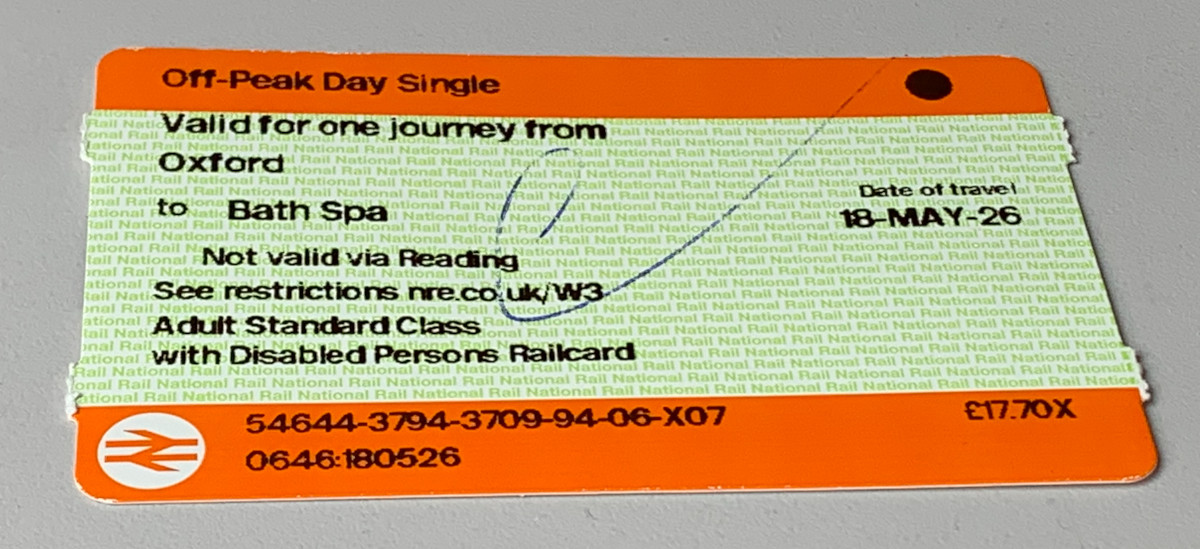
39 in standard class from Oxford, and no signs of huge crowds joining 1st class. Goodly number more by the time we got to Bath Spa. Train manager checking tickets has a word with a young lady with an expired (well expired, by the sound of things) railcard with an advance ticket. Oops; young lady was shocked at the replacement price, and I don't think the new ticket was actually sold. She was with others and they appeared to laugh it off when the train manager was into the next carriage.
Traffic from Oxford was what I would describe as "what you might expect on a typical early day". No hoard of rail advocates (in fact I think I was the only one), lots of relatively young leisure traffic, including significant baggage - a bit touristy. Middle of the day, school term-time, no regular buildup yet. From Oxford it needs time to build up. Swindon west (in this direction) it was already providing a useful service; not sure how much that is just abstraction from the services from London. No catering - and that was announced.
Although I did not use my Interrail pass (home country days are valuable), I did look to plan it out in their app which is generally very good. However, the train did not appear there and I was recommended a change at Didcot. I suspect that's because it was announced so late, and it will appear in the planner in a week or two. Connecting two major overseas tourist cities, I wonder if being missing from Interrail, Eurail and perhaps Britrail may suppress numbers until corrected.
| First day report and ramblings - Bristol <-> Oxford, 6 days a week, 18.5.2026 In "Oxford, Didcot and Reading from the West" [375232/32045/22] Posted by grahame at 13:53, 18th May 2026 | |
Today is a day of celebration - the through train service from Bristol to Oxford is back, six days a week, running every two hours. Until 2004, this useful service was provided by Thames Trains who were swallowed into First Great(er) Western, as were Wessex Trains and it was "optimised" away. Twenty years ago, Wessex Trains were swallowed up too and my own local service through Melksham was reduced to unusable. How times have changed; rail passenger number have increased, the wider community benefit of a decent rail service is now appreciated, and this is another step towards a network service fit for passenger purpose.
Initially, Bristol to Oxford runs every 2 hours, six days a week. Proposals are for it to run every hour - that's from May 2027. A service that only runs every 2 hours is "thin" and will hugely benefit when it's stepped up to every hour, though if "pushed" you can make the journey already at intermediate times doing what we jokingly call the "Didcot Dance" - rushing to make tight connections or doing a slow elegant movement when they don't work.
This "hourly for regional services" should be a minimum, and it is now commonly appreciated that the Swindon to Westbury service through Melksham should also run hourly. We celebrated a return from 2 to 8 trains each way per day from 2014 - another victory for common passenger sense. But infrastructure and freight services mean that the service can't simply and reliably be stepped up in the same way as Bristol to Oxford.
Sunday services should - these days - be similar to those of Monday to Saturday. But yet, GWR's staff arrangements are such that if they were to schedule such a service, it would be beyond the number of staff they have; other services are already reduced at present because of a lack of staff who volunteer to work Sundays. And the service really should go onwards from Oxford - or at least connect - to Bletchley then Milton Keynes or Bedford. The railway has been re-instated but it's waiting - and has been waiting far too long - for staffing issues to be resolved.
However, a celebration today of the return of a 6 day per week usable service from Oxford to Bristol. We have waited - far - too long. And I look forward to seeing next steps on Westbury - Swindon and Bristol - Oxford.
I live in Melksham. What does it mean for us? It means that, once again, sleeping at home and doing a day's work in Oxford would be practical for me; the 07:21 from Melksham connects at Chippenham, and the 17:03 from Oxford connects at Chippenham on the Wayback, with an 18:09 arrival. On Saturday, the 08:02 connects to Oxford. Coming back it's the dance, though. For passengers from Melksham to Bristol the 07:21 now provides a much better connection at Chippenham, and the new 17:12 return is far better connecting back than the 17:00. Off peak / evening peak / weekend fares are sensible. Morning peak fares are silly for historic reasons, and need sorting out, as (for the new passenger) does the difference between "not via London" and "not via Reading" tickets. The wording "Any permitted" - itself a tautology and misleading, is not used on any tickets for this journey; there should be an "any reasonable route" standard which lets you get on the train that will get you there fastest, irrespective of where you have to change.
I am not a great one for first or last days - but I am taking the opportunity of catching the 11:03 from Oxford to Bath - a real boon between the two tourist cities (report in follow up this afternoon). It doesn't connect onwards into Melksham, but as I'm on my way back from mainland Europe with a heavy pack, I'm doubling back at Bath onto the 272 bus that calls opposite my home; later this month, that nearer option will be gone for six months of road works in Bath. Public Transport remains a changing and developing world and it's been good to see, over the last 10 days, the good and the not-so-good elsewhere in Europe too.
While writing, what other service in our area, culled when trains were not as busy, is needed back? How about the trains that ran until a few years ago from London to Trowbridge, Bradford-on-Avon, Bath and Bristol? This one should be a no brainer for a joined up GBR - there are already Waterloo - Salisbury and separate Salisbury - Bristol trains running, both with class 158/159 class trains and it shouldn't be beyond the wit of the timetabling experts to join them up!
Finally, a "Thank you" to friends in the rail industry and regulation have put the Bristol to Oxford service back. The community, long asking for this sensible move, really appreciates it.
Of late, the team at GWR have been - it seems - concentrating on the changes that are coming with GBR and - sorry - it feels like the good community relations we've had are somewhat on the back burner. Natural perhaps as the GWR staff can no longer consult and make changes within the remaining First group term, but unanswered emails and selective data still hurt. There would be no harm in a polite and explained "sorry - we can't". We are seeing a greater political interest, with more feedback and follow up via MPs in those constituencies where the MP is engaged - so that helps Melksham, Chippenham, Bradford on Avon and Avoncliff, and the case for Corsham too (which this new service would call at). Across the rest of West Wilts, we feel we are on "ignore" and it is difficult to judge how to best campaign for what, I suggest, everyone wants - an improved (for both passengers and financially) service. It would be so easy, as First staff become civil servants, for them to prioritise looking good for their new bossed and for their own careers over passengers. If any of you are reading this, we understand your plight; please understand our conundrum and help us work forward to mutual goals.
| Row over seafront cycling ban in Weymouth In "Active travel: Cyclists and walkers, including how the railways deal with them" [375231/32044/50] Posted by CyclingSid at 13:51, 18th May 2026 | |
I think we have been here before.
‘I’m not anti-cycling at all. But…’ Row over seafront cycling ban in Weymouth erupts after local claims young cyclists are riding “no hands on the handlebars at excessive speed” in no-bike zone – but others say “99% of people” respect the restrictions
It feels like it’s been a while since we covered a good/bad old-fashioned cycling ban now on the live blog. And this one even features the classic caveat of the anti-cycling scoundrel: ‘I’m not ant-cycling, but…’
This week’s debate focuses on Weymouth Esplanade, which since 2018 has imposed a ban on people riding bikes between 10am and 5.30pm, from 1 May to 30 September (replacing the complete ban introduced in 2009).
It was kicked off by Jonathan, a “furious” letter writer to the Dorset Echo, who complained that “dangerous” cycling was putting pedestrians on the promenade at risk – after coming across one youth riding no-hands the other day.
It feels like it’s been a while since we covered a good/bad old-fashioned cycling ban now on the live blog. And this one even features the classic caveat of the anti-cycling scoundrel: ‘I’m not ant-cycling, but…’
This week’s debate focuses on Weymouth Esplanade, which since 2018 has imposed a ban on people riding bikes between 10am and 5.30pm, from 1 May to 30 September (replacing the complete ban introduced in 2009).
It was kicked off by Jonathan, a “furious” letter writer to the Dorset Echo, who complained that “dangerous” cycling was putting pedestrians on the promenade at risk – after coming across one youth riding no-hands the other day.
...and so on and so on https://road.cc/news/cycling-live-blog-15-may-2026
I know Weymouth is Graham's go to seaside place, but I have been put off by this sort of thing. Anyway keeps rif-raf like me out the place! But you are always welcome to come to Portsmouth and Southsea.
| Re: Lighthouses in the West - expanded topic heading In "The Lighter Side" [375230/32040/30] Posted by JayMac at 12:17, 18th May 2026 | |
I've been subscribed to keeping_a_lighthouse since his second video. Excellent nascent channel.
| Re: Would you give up your seat on the London Tube for me? In "Transport for London" [375229/32039/46] Posted by Chris from Nailsea at 12:07, 18th May 2026 | |
| Re: Would you give up your seat on the London Tube for me? In "Transport for London" [375228/32039/46] Posted by grahame at 11:59, 18th May 2026 | |
"Please give up this seat to passengers with reduced mobility". Does not apply to me - I can no longer stand for more than a few minutes, but that is not a reduced mobility.
It is in my view, and if I were still mobile (I'm now a wheelchair user), I would be offering my seat...
My view would be that the wording should be "please give up this seat to passengers less able to stand" which - after all - is closer to the purpose of having seats available ...
I got a seat - the wheelchair one - at Liverpool Street. No wheelchairs to be seen on this train. Chris - you would have had it in proper priority
| Re: Would you give up your seat on the London Tube for me? In "Transport for London" [375227/32039/46] Posted by Chris from Nailsea at 11:55, 18th May 2026 | |
I have a recurring back problem, which means that sometimes I actually prefer to stand rather than take a seat.
| Re: Would you give up your seat on the London Tube for me? In "Transport for London" [375226/32039/46] Posted by ChrisB at 11:45, 18th May 2026 | |
"Please give up this seat to passengers with reduced mobility". Does not apply to me - I can no longer stand for more than a few minutes, but that is not a reduced mobility.
It is in my view, and if I were still mobile (I'm now a wheelchair user), I would be offering my seat...
